Oktoberfest 2026 Brings New Attractions, Traditions and Visitor Services to Munich
The world’s largest folk festival returns to the Theresienwiese from September 19 to October 4, combining Bavarian traditions with new rides, expanded services, changing payment habits and practical improvements for millions of visitors.

Munich is preparing for another enormous celebration when Oktoberfest returns to the Theresienwiese in September 2026. The 191st edition of the famous folk festival (Volksfest) will run for 16 days, from Saturday, September 19, until Sunday, October 4. Organizers expect millions of visitors from Germany and abroad to fill the festival grounds, beer tents and amusement areas. Oktoberfest remains one of Germany’s best-known cultural events and an important attraction for international travelers interested in Bavarian traditions.
The scale of the festival becomes clear from the size of the site and the number of businesses hoping to participate. The Theresienwiese festival area covers approximately 34.5 hectares in central Munich. For 2026, 954 businesses submitted applications for a place on the festival grounds (Festgelände), while 478 were ultimately approved. They include food and beverage businesses, amusement rides, market stalls and service providers that together create the temporary city-like environment associated with Oktoberfest.
Although Oktoberfest is famous internationally, its origins are closely connected with Bavarian history. The first festival was organized in 1810 following the wedding of Crown Prince Ludwig of Bavaria and Princess Therese of Saxe-Hildburghausen. A horse race was held on a meadow outside Munich, and the celebration proved popular enough to be repeated. The modern event therefore developed from a royal wedding celebration into an annual public celebration (Volksfestfeier) attended by millions of people.
The location itself still preserves the memory of that first celebration. Munich residents commonly call Oktoberfest “die Wiesn,” a Bavarian expression connected with the name Theresienwiese. The festival meadow (Festwiese) was named in honor of Princess Therese and has remained the traditional home of Oktoberfest for more than two centuries. Today it lies close to central Munich rather than outside the city as it did in 1810.
The official opening remains one of the most recognizable Oktoberfest rituals. On September 19, the first beer keg will be opened at noon inside the Schottenhamel festival tent. The Mayor of Munich performs the traditional keg tapping (Fassanstich) before beer service officially begins across the festival. Until that moment, the tents may serve non-alcoholic drinks and small dishes, but Oktoberfest beer cannot yet be poured.
Oktoberfest begins with much more than the opening of a beer barrel. Earlier on the first day, around 1,000 participants traditionally travel through Munich in decorated carriages and brewery vehicles before reaching the Theresienwiese. The event is known as the landlords’ and breweries’ parade (Einzug der Wiesnwirte und Brauereien) and provides a ceremonial introduction before the first keg is opened. Horse-drawn brewery wagons, musicians and festival representatives create one of the most visually distinctive events of the opening weekend.
Another major traditional event takes place the following morning. On Sunday, September 20, thousands of participants will travel through central Munich wearing historical clothing and representing cultural associations, musicians and shooting clubs. The nearly seven-kilometer procession celebrates traditional costume (Tracht) from Bavaria and other regions. Brass bands and elaborate historical clothing make the event one of the most popular public spectacles associated with Oktoberfest.
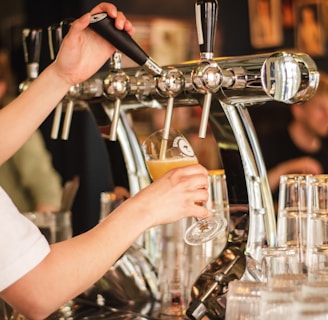
Beer remains inseparable from Oktoberfest’s international image, although prices continue to rise. A one-liter serving will cost between €14.80 and €15.90 in 2026, depending on the festival tent. Visitors normally order beer by asking for a one-liter mug (Maßkrug), usually shortened simply to “eine Maß” in everyday Oktoberfest language. Prices are determined by individual festival businesses rather than directly fixed by Munich’s government, although the city reviews whether proposed prices are reasonable.
Only particular Munich breweries are permitted to supply the traditional Oktoberfest beer. The six breweries associated with the festival are Augustiner, Hacker-Pschorr, Hofbräu, Löwenbräu, Paulaner and Spaten. Their special festival beers are generally stronger than ordinary lager and form part of Oktoberfest’s protected brewing tradition (Brautradition). Visitors unfamiliar with German beer culture should remember that one Maß contains a full liter, making responsible consumption especially important.
The beer tents themselves vary considerably in atmosphere, size and food. Fourteen large tents operate on the main Oktoberfest grounds, while another three large tents are located within the historic Oide Wiesn area. In addition, visitors can choose among 21 smaller festival tents (Festzelte), many of which specialize in particular dishes, drinks or styles of entertainment. Some tents emphasize traditional brass music, while others become considerably more energetic and party-oriented later in the evening.
Visitors do not normally need to pay simply to enter a beer tent. Reservations are nevertheless particularly valuable during evenings and weekends because the largest tents can reach capacity quickly. A table reservation (Reservierung) must normally be arranged directly with the individual tent rather than through a single central Oktoberfest booking service. Even without a reservation, sections of the tents remain available to spontaneous visitors, although finding a seat can be difficult during the busiest periods.
Music is an important part of the atmosphere, and a scheduling change has been introduced for 2026. Large festival tents may now begin live music earlier than in previous years. Traditional brass-band music (Blasmusik) can start at 11 a.m. on weekdays and at 10 a.m. on weekends, except on the opening day. Until noon, only traditional brass music is allowed, helping preserve the daytime Bavarian character before the musical program becomes broader later in the day.
Oktoberfest is also one of Germany’s largest temporary amusement parks. Hundreds of operators applied for space in 2026, and visitors can choose between historic attractions and modern high-speed rides. One of the new attractions, Chaos Pendel, creates an extreme pendular motion (Pendelbewegung) while carrying passengers as high as 42 meters and reaching speeds of up to 80 kilometers per hour. Other 2026 newcomers include Shake & Roll and Fisherman’s, a multi-level attraction combining obstacles, action and water-themed elements.
The festival does not abandon older attractions simply because new technology becomes available. Traditional rides such as the Ferris wheel, carousels and classic fairground games remain important parts of the experience. This combination of novelty and fairground heritage (Schaustellertradition) has received additional recognition because Germany’s fairground culture was added to the country’s list of intangible cultural heritage in 2026. The tradition combines technical skills, mobile businesses, family enterprises, food stands, games and amusement rides that travel between public festivals.
Visitors wanting an even stronger sense of historical Oktoberfest can enter the Oide Wiesn in the southern part of the Theresienwiese. This separate area recreates elements of older Bavarian festival culture with historic attractions, folk music and more traditional surroundings. The nostalgic fairground (nostalgischer Jahrmarkt) includes older-style rides that cost €1.50 each in 2026. Admission to the Oide Wiesn costs €4 for visitors aged 15 and above, while children aged 14 and under enter free.
The Oide Wiesn began as part of Oktoberfest’s 200th-anniversary celebrations in 2010 and proved sufficiently popular to become a regular feature. Its three large tents emphasize Bavarian music, traditional dress, folk dancing and older forms of entertainment. Visitors interested in living traditions (gelebtes Brauchtum) may therefore find the atmosphere there calmer and more historically focused than in some of the enormous main festival tents. A museum tent also introduces visitors to the history of fairgrounds and popular entertainment.
Food at Oktoberfest extends well beyond beer and pretzels. Roast chicken remains one of the best-known dishes, while visitors can also find sausages, roast ox, fish, dumplings, traditional desserts and increasingly varied vegetarian options. The enormous range of festival food (Festessen) reflects both traditional Bavarian cuisine and the changing preferences of international visitors. Smaller tents and stalls can be especially useful for travelers who want to explore different dishes without spending an entire evening at one reserved table.
Paying for food and attractions is also becoming more modern. Cash remains widely used and visitors should still carry some because payment systems differ between individual businesses. However, cashless payment (bargeldloses Bezahlen) is available at roughly half of the festival’s booths and attractions in 2026. Card acceptance continues to expand each year, but travelers should not assume that every beer tent, ride or smaller vendor will accept the same payment method.
One practical improvement concerns drinking water. Free fountains are now available at ten locations around the festival area, including points near toilet facilities, the Familienplatzl and sections of the Oide Wiesn. Visitors can use these drinking-water fountains (Trinkwasserbrunnen) to refill suitable non-breakable containers. Bringing glass containers is not appropriate because glass restrictions form part of Oktoberfest’s safety rules.
Security arrangements are substantial because millions of people pass through the site during the festival. The Theresienwiese is fenced, visitors pass through controlled entrances and security personnel work together with Munich police and emergency services. A particularly important rule concerns bag restrictions (Taschenbeschränkungen): ordinary bags and backpacks brought onto the grounds may generally have a maximum volume of three liters and maximum dimensions of approximately 20 by 15 by 10 centimeters. Larger luggage should therefore be left at accommodation or placed in designated storage facilities outside the main grounds.
Getting to Oktoberfest by public transport is usually easier than driving into central Munich. The Theresienwiese can be reached by U-Bahn, S-Bahn, tram and bus, while Munich Central Station is only around a 15-minute walk away. Visitors are strongly encouraged to use public transport connections (öffentliche Verkehrsverbindungen) or park-and-ride facilities instead of attempting to drive directly to the festival. Traffic restrictions operate around the Theresienwiese, and special rules also affect buses, car-sharing vehicles and electric scooters.
Crowds are one of the most important practical issues for first-time visitors. Weekends and evenings can become extremely busy, particularly when the weather is poor and more people try to enter the covered tents. The city has strengthened visitor-flow management (Besucherlenkung) in 2026 and encourages guests to consider weekday visits, alternative entrances and attractions outside the most crowded beer tents. A new coordination center is intended to help security agencies identify overcrowding situations earlier and respond more effectively.
Opening times vary according to the day and the type of attraction. During most weekdays, the main grounds open at 10 a.m., while Saturdays and Sundays begin earlier. The standard closing time (Sperrstunde) for most large and small tents is 11:30 p.m., although beer service in the large tents normally ends at 10:30 p.m. Two specialist venues are allowed to remain open until 1 a.m., making them exceptions to the usual Oktoberfest schedule.
Families are an important part of Oktoberfest despite the event’s international association with beer. Historic rides, children’s attractions and quieter daytime hours offer a different experience from the lively evening atmosphere of the largest tents. The Oide Wiesn is particularly family-friendly (familienfreundlich), with low-cost historic rides, children’s facilities and traditional entertainment. Planning an earlier visit can make the festival considerably easier for families with young children.
Accessibility is also receiving additional attention in 2026. Many festival tents offer ramps and accessible seating, while barrier-free toilets and drinking-water points are distributed across the grounds. The festival has expanded its barrier-free access (barrierefreier Zugang) through infrastructure improvements and the possibility of reserving wheelchairs online. Munich is also participating in the Hidden Disabilities Sunflower initiative, which uses an internationally recognized symbol to indicate that someone may need additional assistance despite not having a visible disability.
People who lose belongings at Oktoberfest will encounter a change this year. The official lost property office is no longer inside the previous Service Center location at the Theresienwiese. The new lost-and-found office (Fundbüro) is situated at the Deutsches Museum Verkehrszentrum on Theresienhöhe, within walking distance of the festival grounds. Items found in tents or elsewhere on the site may not arrive there until the following day, so visitors are advised not to expect immediate retrieval.
Visitors do not need traditional Bavarian clothing to attend the festival. Dirndls and lederhosen are extremely popular, particularly among German visitors and increasingly among international tourists, but there is no official dress requirement. Wearing traditional clothing (Trachtenkleidung) is therefore a personal choice rather than an admission condition. Travelers who decide to buy such clothing may encounter considerable differences between inexpensive costume-style products and traditional garments designed to be worn for many years.
For German learners, Oktoberfest also provides exposure to Bavarian words that may not appear in ordinary textbooks. The best-known example is “Wiesn,” the local term used for Oktoberfest and derived from Theresienwiese. Visitors will also encounter Bavarian dialect (bayerischer Dialekt) in signs, songs, greetings and expressions used inside the festival tents. Understanding standard German remains entirely sufficient for communication, but recognizing a few regional expressions can make the cultural experience more interesting.
The festival ends with traditions just as formalized as those that open it. On the second Sunday, September 27, musicians from the festival tents gather for a major outdoor concert beneath the Bavaria statue. A traditional gun salute (Böllerschießen) then marks the final day on October 4. These ceremonies demonstrate that Oktoberfest is not simply a large drinking event but a structured cultural festival with rituals repeated across generations.
Oktoberfest’s continuing popularity also makes it economically significant for Munich. Hotels, restaurants, public transport, retail businesses and tourism services all benefit when millions of visitors arrive over little more than two weeks. This enormous visitor economy (Besucherwirtschaft) extends well beyond the Theresienwiese itself as travelers explore Munich’s historic center, museums, restaurants and surrounding Bavarian destinations. The festival therefore operates simultaneously as a local tradition, an international tourism event and a major temporary marketplace.
For international visitors in 2026, successful planning largely depends on understanding when the festival is busiest, how the tents work and which practical restrictions apply. Arriving earlier in the day, using public transportation and checking reservation conditions can greatly reduce unnecessary difficulties. Learning a little festival etiquette (Festetikette) can also help, especially when sharing tables, ordering drinks or moving through crowded tents. Visitors should remember that Oktoberfest is attended by local families, traditional associations and international tourists alike, so respectful behavior is an important part of maintaining its communal atmosphere.
The 2026 Oktoberfest will ultimately combine a surprisingly old cultural framework with continual modernization. Historic parades, Bavarian music and traditional beer will coexist with new rides, card payments, accessibility improvements and sophisticated crowd-management systems. This balance between tradition and modernization (Modernisierung) helps explain why the event continues to attract visitors more than two centuries after the first celebration. From September 19 to October 4, Munich will once again transform the Theresienwiese into one of the world’s largest temporary spaces for food, music, amusement and Bavarian culture.
Key German Vocabulary
Volksfest – folk festival
Festgelände – festival grounds
Volksfestfeier – public celebration
Festwiese – festival meadow
Fassanstich – keg tapping
Einzug der Wiesnwirte und Brauereien – landlords’ and breweries’ parade
Tracht – traditional costume
Maßkrug – one-liter mug
Brautradition – brewing tradition
Festzelte – festival tents
Reservierung – reservation
Blasmusik – brass-band music
Pendelbewegung – pendular motion
Schaustellertradition – fairground heritage
nostalgischer Jahrmarkt – nostalgic fairground
gelebtes Brauchtum – living traditions
Festessen – festival food
bargeldloses Bezahlen – cashless payment
Trinkwasserbrunnen – drinking-water fountains
Taschenbeschränkungen – bag restrictions
öffentliche Verkehrsverbindungen – public transport connections
Besucherlenkung – visitor-flow management
Sperrstunde – closing time
familienfreundlich – family-friendly
barrierefreier Zugang – barrier-free access
Fundbüro – lost-and-found office
Trachtenkleidung – traditional clothing
bayerischer Dialekt – Bavarian dialect
Böllerschießen – gun salute
Besucherwirtschaft – visitor economy
Festetikette – festival etiquette
Modernisierung – modernization